


The Lake Geneva area is known for its lakeside adventures, scenic boat rides and relaxed pace of life, but long before it became a vacation destination, this land held deep significance for the Potawatomi tribe. Their history here stretches back generations, woven into the hills, trails and waters surrounding Geneva Lake. Understanding their story adds meaningful context to the landscape that visitors enjoy today and offers a richer sense of place for anyone exploring the region.
A People, A Place, A Name
Long before vacation homes and family getaways, this beautiful lake and its surrounding hills were home to the Potawatomi tribe. The Potawatomi were part of a larger alliance known as the Council of Three Fires, including the Ojibwe (Chippewa) and Odawa (Ottawa) nations. Their name means roughly “those who keep the fire” or “keepers of the sacred fire.”
In the region around Geneva Lake, the Potawatomi name for the lake was Kishwauketoe, meaning “clear water.” The lake was later referred to by early settlers as “Big Foot Lake,” named after the Potawatomi chief known as Maungeezik, or “Big Foot.”
Life by the Lake
The Potawatomi were rooted in this region thanks to the rich natural offerings around the lake, including abundant fish, game in the hills and woods, and fertile ground for growing “the Three Sisters” (corn, beans, squash).
They established villages around what is now the western end of Geneva Lake, near present-day Fontana and Williams Bay, and used trails skirting the lake’s edge.
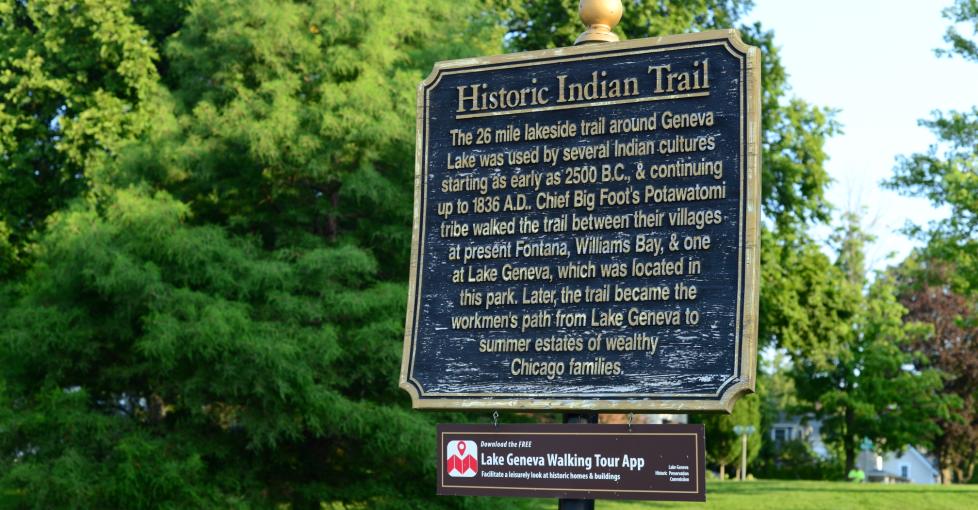
In Downtown Lake Geneva’s Library Park, you’ll find a historic marker that reads, “The 26-mile lakeside trail along the shore of Geneva Lake was used by several Indian cultures from 2500 BC and continuing up to 1836 AD. Chief Big Foot’s Potawatomi tribe walked the trail between their villages at present Fontana, Williams Bay and Lake Geneva located in this park.”
Encounters, Change and Displacement
As European and American settlements expanded in the 19th century, the local Potawatomi tribes felt the pressure of treaties, land cessions and forced removal. For instance, the Treaty of Chicago in 1833, and other associated land deals, impacted vast swaths of Potawatomi territory, including in southeastern Wisconsin.
By 1836, the Potawatomi presence in this region had been dramatically altered as the U.S. government’s Indian removal policies pushed many bands westward. The local chief Big Foot eventually led his people away from the lake shores they had known for generations.
Cultural Legacy & What It Means Today
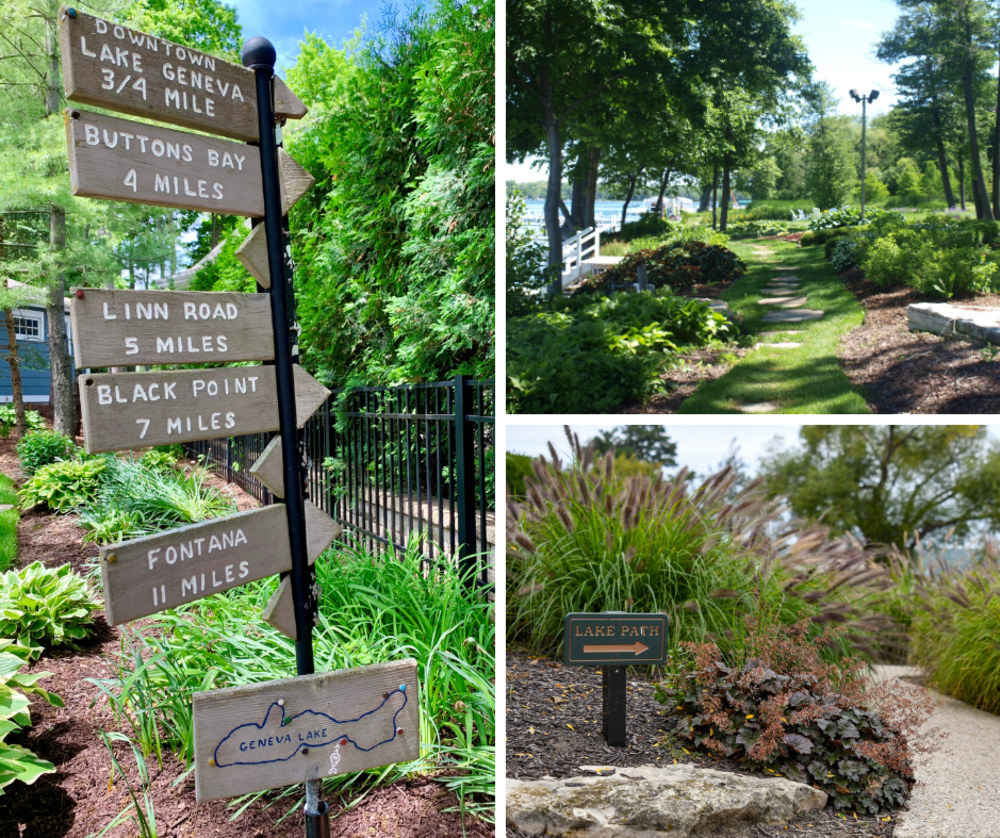
So why does this matter for us today? Because when you boat across the lake or hike the Shore Path, you’re experiencing a part of Lake Geneva with a much longer story than the historic mansions or turn-of-the-century resorts. Recognizing that the Potawatomi lived here, thrived here and left their mark helps deepen our respect and connection to the place.
Their culture emphasizes values such as respect for all living things, humility, truth, bravery and love — teachings that remain central to many Native communities including the Potawatomi. Even as they faced removal and the loss of their ancestral lands, the Potawatomi survived, preserved traditions and continue to exist today.
Places Where You Can Connect Locally
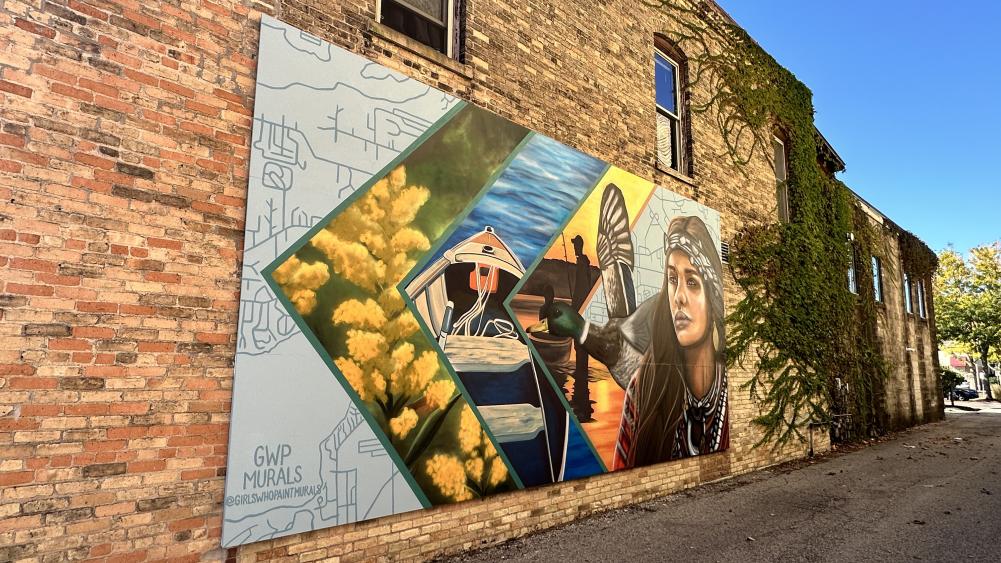
If you’re staying in the Lake Geneva area and want to explore this history in person, here are some local spots where you can see the Potawatomi presence woven into the landscape:
Geneva Lake Museum (Lake Geneva)
This is a great starting point for grounding yourself in the region’s past. The museum highlights early life around Geneva Lake and includes references to the Indigenous communities who lived here long before the resort era.
Geneva Lake Shore Path (Lake Geneva)
This 26-mile lakeside trail is one of the most meaningful ways to connect with history. Portions of the path follow the same routes walked by Chief Big Foot’s Potawatomi band between villages at present-day Fontana, Williams Bay, and Lake Geneva. As you walk, you’re nearly tracing their footsteps.
Statue of the Potawatomi Woman (Williams Bay)
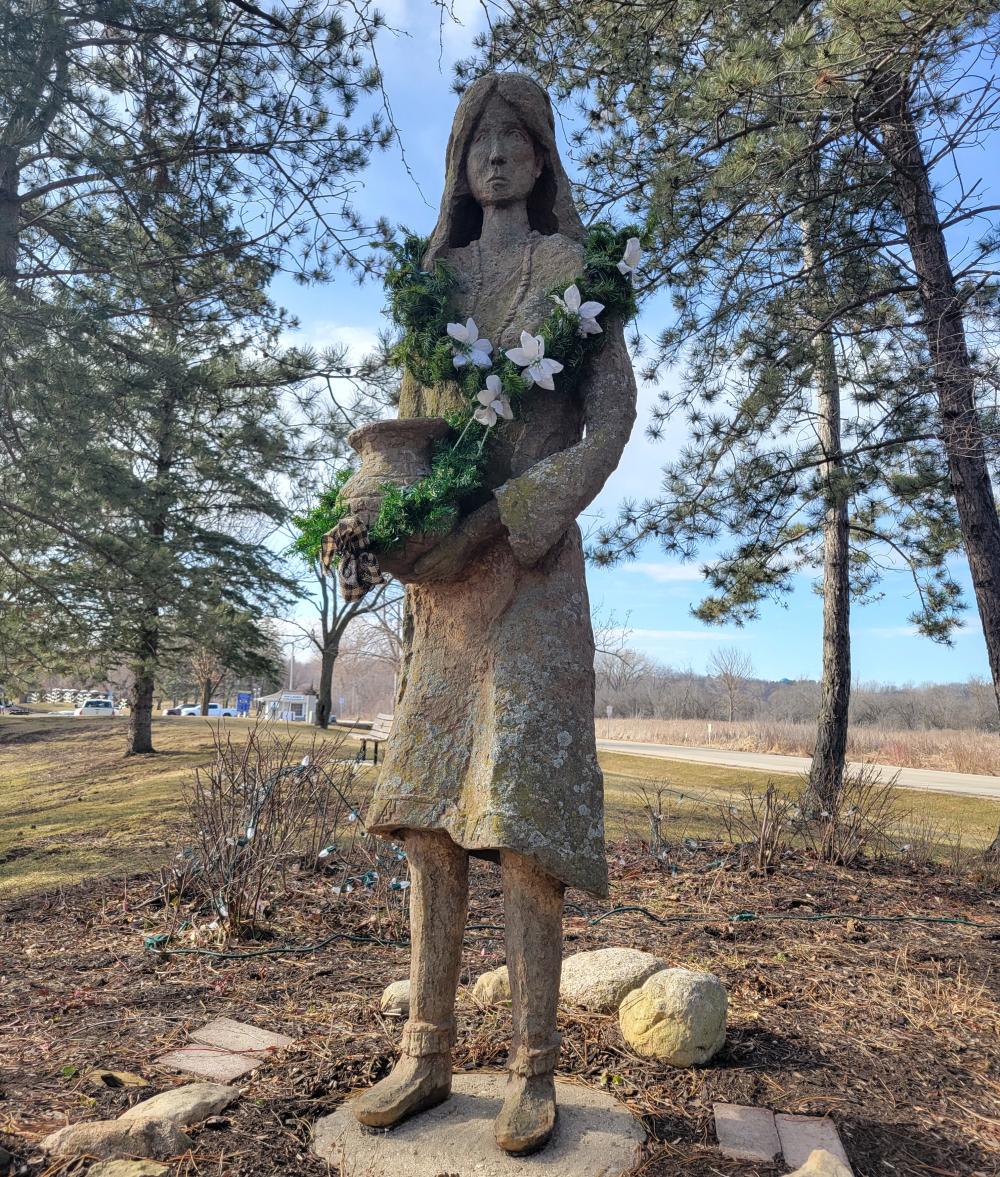
Along Williams Bay’s lakefront path, you’ll find a beautiful and contemplative statue by artist Douglas Henderson, commissioned by the Williams Bay Women’s Club. It honors one of Chief Big Foot’s wives, who, according to oral tradition, died during an epidemic in 1836. Her burial site is believed to be near today’s Barrett Memorial Library. It’s a quiet place to pause and reflect on the people who called this shoreline home.
Chief Big Foot Bronze Sculpture (Reid Park, Fontana)
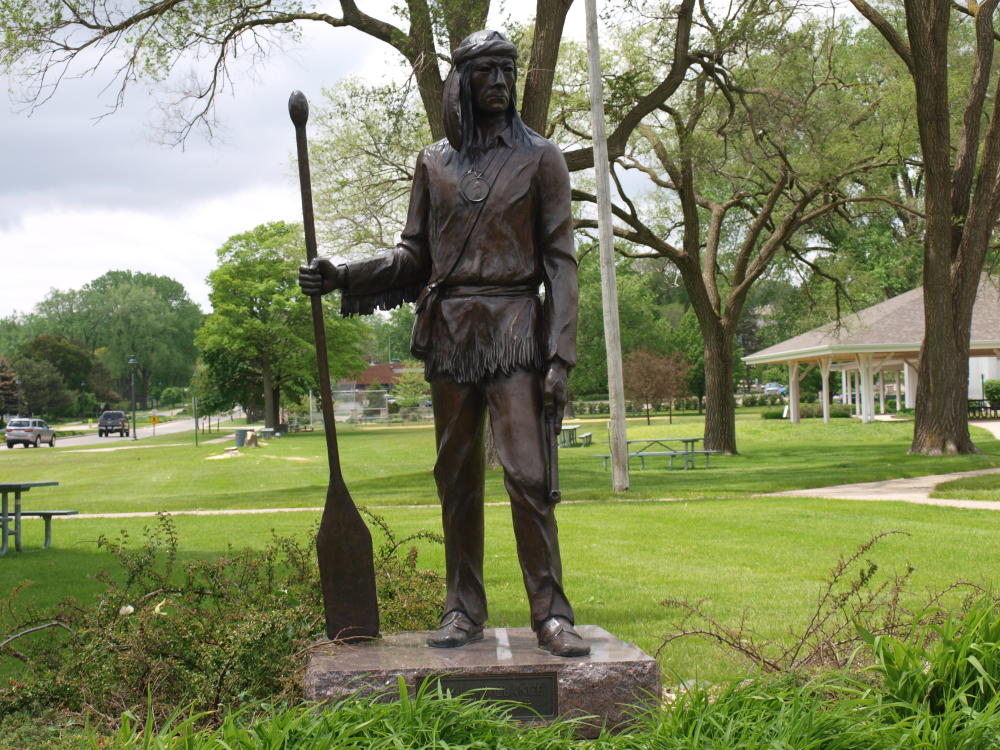
In Fontana’s Reid Park, you’ll find a striking bronze sculpture created by local artists Jay Brost and his wife, Barbara. It depicts Chief Big Foot taking one last look at the lake his people loved for generations — a moment symbolizing both resilience and loss. It’s a powerful reminder of the Potawatomi’s deep relationship with this land and water.
Big Foot Beach State Park (Lake Geneva)
Named for Chief Big Foot, this lakefront park offers space to enjoy the natural shoreline setting, perfect for imagining what the area looked like when Potawatomi villages dotted the region.
Kishwauketoe Nature Conservancy (Williams Bay)
Located on the north shore of Geneva Lake, this 231-acre nature preserve is the largest protected natural space on the lake, and it carries the Potawatomi name for the area. Oral tradition holds that the Potawatomi once lived on this land, and today the Conservancy honors that legacy by preserving the wetlands, meadows, forests and prairies they would have known. With four miles of trails and a stunning mix of wildflowers, tall oaks and rolling terrain, it’s a wonderful place to experience the landscape in something close to its original form.
Connecting Today’s Visit With Yesterday’s Story
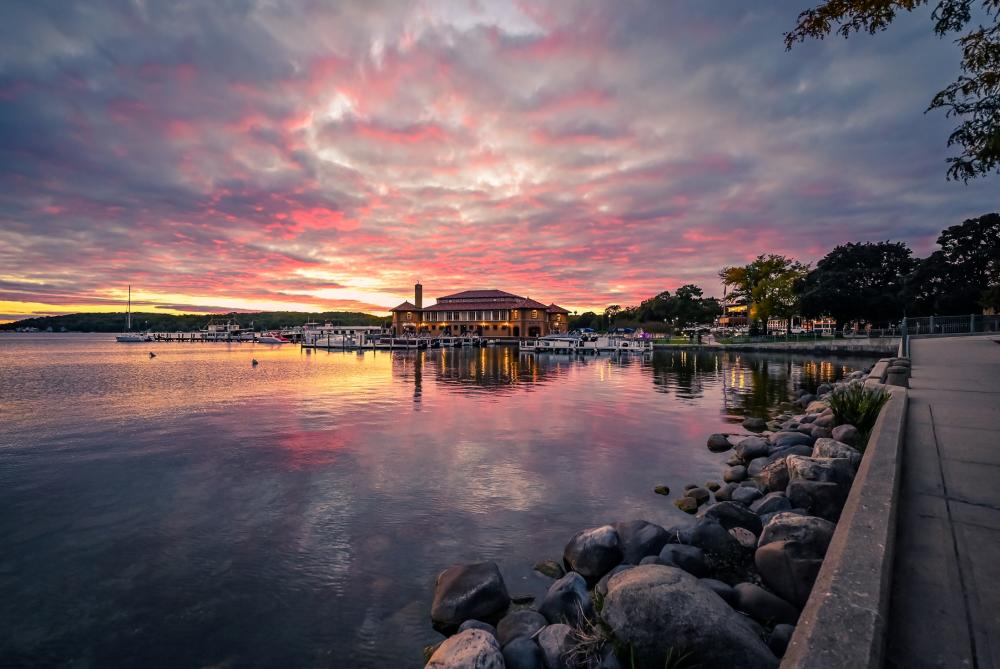
As you plan your visit and explore Lake Geneva, taking in its trails, lake views and natural beauty, it’s worth remembering that this landscape carries a much older story. The Potawatomi lived, traveled and built community around these shores long before the region became the destination it is today. Visiting the sites that honor their presence offers a deeper connection to the area and a meaningful way to acknowledge the people who first called these clear waters home.